Why Your RM82.94 Bill Becomes RM83: A Practical Guide to Malaysia’s Rounding Rules
A practical guide to Malaysia’s 5-sen rounding mechanism, why e-wallet totals can look odd, what should happen at checkout, and how to file a proper consumer complaint when charges look wrong.
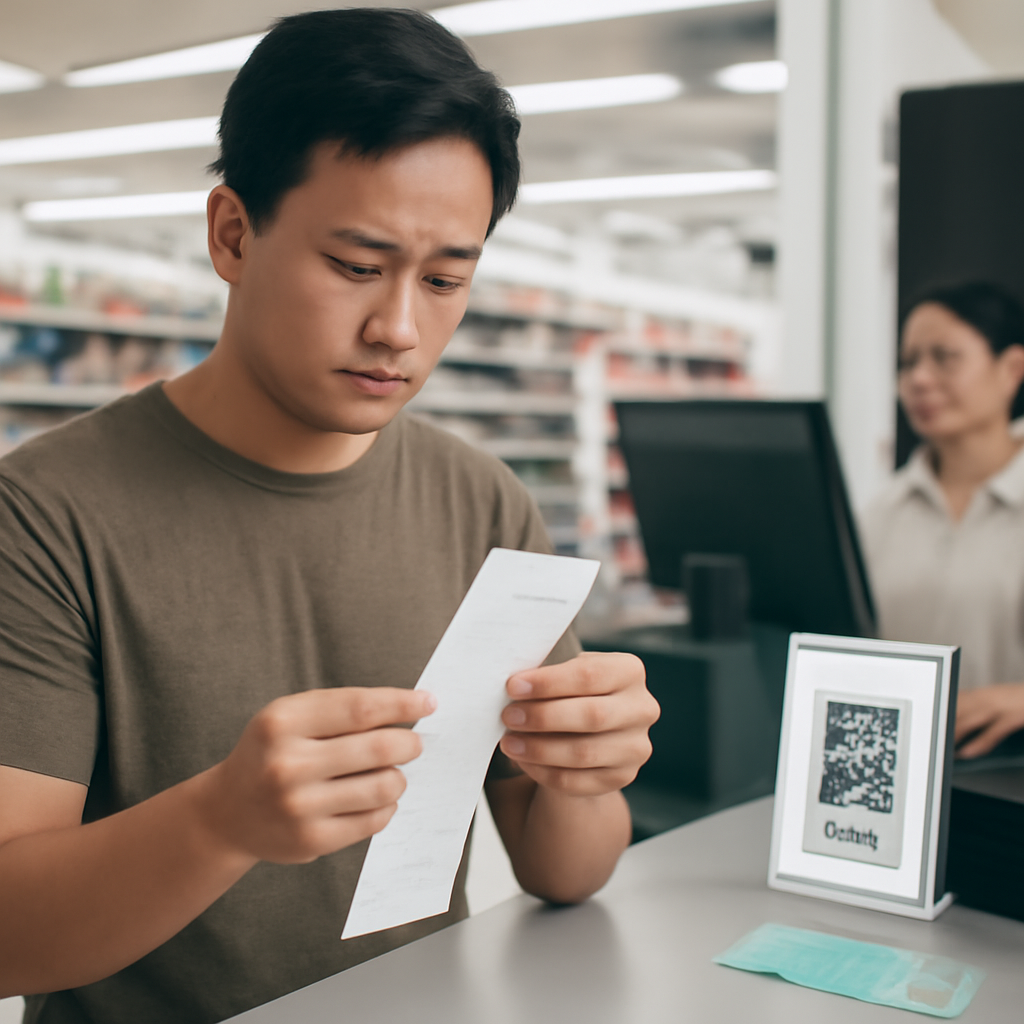
If you have ever stared at a checkout screen and wondered why RM82.94 became RM83.00, you are not alone. A recent discussion in Malaysia’s online communities captured exactly that frustration: if we are paying digitally, why is there still rounding?
This is one of those small money issues that feels minor in one purchase but irritating in daily life. It also sits at the intersection of central bank rules, merchant POS setup, and consumer rights. The result is confusion.
This guide explains what is normal, what is questionable, and what to do when a bill does not look right.
The core rule many people miss
Malaysia’s 5-sen rounding mechanism exists because 1-sen coins were phased out from circulation. Bank Negara Malaysia’s published guidance explains the familiar pattern:
- Totals ending in 1, 2, 6, 7 sen are rounded down
- Totals ending in 3, 4, 8, 9 sen are rounded up
- Totals ending in 0 or 5 sen stay the same
So mathematically, RM82.94 becoming RM82.95 is expected under rounding to the nearest 5 sen. But RM82.94 becoming RM83.00 is a different jump and naturally raises questions.
Why people get confused at modern checkouts
In theory, digital payments should handle exact cents. In practice, some checkout systems apply one “final payable amount” for all methods because the point-of-sale software is configured that way. Staff often cannot override this.
That is why you may hear comments like, “The POS is programmed like that.” It is not always malicious; often it is a configuration issue, or a business policy applied too broadly across cash and cashless channels.
Still, from a consumer perspective, intent is not the main point. Transparency and correct billing are.
Cash rounding vs digital charging: what is the practical difference?
Think of checkout in two layers:
- Item pricing layer: each item price and tax should be displayed clearly.
- Settlement layer: final amount paid (cash or digital) is calculated.
Rounding was designed to simplify settlement where exact small coins are impractical. But if a merchant is taking digital payment, many consumers reasonably expect exact-cent settlement unless clearly disclosed otherwise.
The practical fairness test is simple: if a business rounds, it should do so consistently, by published rules, and visibly on the receipt.
How to check whether your bill is reasonable
Before escalating, run this quick checklist:
- Step 1: Check subtotal and tax lines. Ensure no hidden service line was added.
- Step 2: Check the rounding line. Some receipts show “Rounding Adj.” explicitly.
- Step 3: Compare math. RM82.94 should normally map to RM82.95 under nearest-5-sen logic, not RM83.00.
- Step 4: Confirm payment method. Ask whether the outlet applies identical rounding for cash and e-wallet/card.
- Step 5: Ask for policy in writing. A store-level policy statement often clarifies whether this is corporate standard or cashier-level handling.
Most disputes become clearer once the receipt structure is reviewed line by line.
When this becomes a consumer-rights issue
A one-off discrepancy is annoying. A repeated pattern across branches can become a consumer protection matter, especially if price display and payable amount communication are inconsistent.
Malaysia’s domestic trade and cost-of-living ministry (KPDN) enforces frameworks around price indication and anti-profiteering behavior. That does not mean every rounding complaint is profiteering, but it does mean businesses are expected to display and apply prices properly.
The key principle: customers should not be surprised at the last payment step by unexplained amount changes.
How to file a complaint that actually gets traction
If you want action, emotional posts alone are rarely enough. Documentation matters.
- Keep the full receipt (or screenshot) showing subtotal, taxes, rounding, and final paid amount.
- Record branch, date, time, and payment method.
- Note what staff explained at point of sale.
- If possible, compare with another branch or with cash payment behavior.
- File through official consumer complaint channels with evidence attached.
Clear, structured complaints are easier for regulators and customer service teams to investigate than vague accusations.
What merchants should do now (before this becomes a bigger trust issue)
For operators, this is fixable and worth fixing quickly. Small billing frictions damage trust faster than expected.
- Audit POS rounding logic for each payment type.
- Display a short rounding notice at checkout when applicable.
- Train front-line staff to explain the rule clearly in one sentence.
- Escalate recurring customer complaints to finance/IT, not just store supervisors.
Even if the total financial value is tiny per transaction, perception risk is not. In a cost-sensitive market, customers remember every ringgit and sen.
Bottom line
The anger around “RM82.94 became RM83.00” is not just about six sen. It is about predictability and fairness in a digital-first economy.
Malaysia already has a known 5-sen rounding framework. The practical challenge now is consistent implementation in modern POS systems, especially when consumers use e-wallets and expect exact-cent logic unless clearly informed otherwise.
For consumers: check the receipt math and document evidence. For merchants: fix the configuration and communicate clearly. For both sides, clarity is cheaper than conflict.
Read next
- Received an LHDN CP500 Notice? A Practical Guide for Employees, Freelancers, and Small Business Owners in Malaysia
- Severe Weather Alerts Across Malaysia: What KL, Families, Commuters, and SMEs Should Do Today
- From “Looks Good” to “Works in Production”: A Practical Eval Stack for AI Workflows
Sources
- https://www.bnm.gov.my/misc/-/asset_publisher/2BOPbOBfILtL/content/about-the-rounding-mechanism
- https://www.bnm.gov.my/misc/-/asset_publisher/2BOPbOBfILtL/content/frequently-asked-questions-faqs-on-rounding-mechanism
- https://www.bnm.gov.my/-/introduction-of-a-rounding-mechanism-for-over-the-counter-payments
- https://www.reddit.com/r/malaysia/comments/1reh0p0/why_is_this_a_thing_is_it_even_legal/
- https://www.reddit.com/r/malaysia/hot/.rss
- https://www.reddit.com/r/popular/hot/.rss
- https://getdaytrends.com/malaysia/
- https://www.kpdn.gov.my/en/submenu/enforcement-submenu/protecting-consumers/enforcement-of-the-price-control-and-anti-profiteering-act
- https://www.kpdnhep.gov.my/en/contact-us/faq/enforcement/the-price-control-and-anti-profiteering-act