The 90-Minute Focus System Malaysian Teams Are Using to Beat AI-Era Task Overload
A practical Work & Productivity playbook to reduce meeting spillover, control task switching, and regain deep work in AI-heavy workflows.
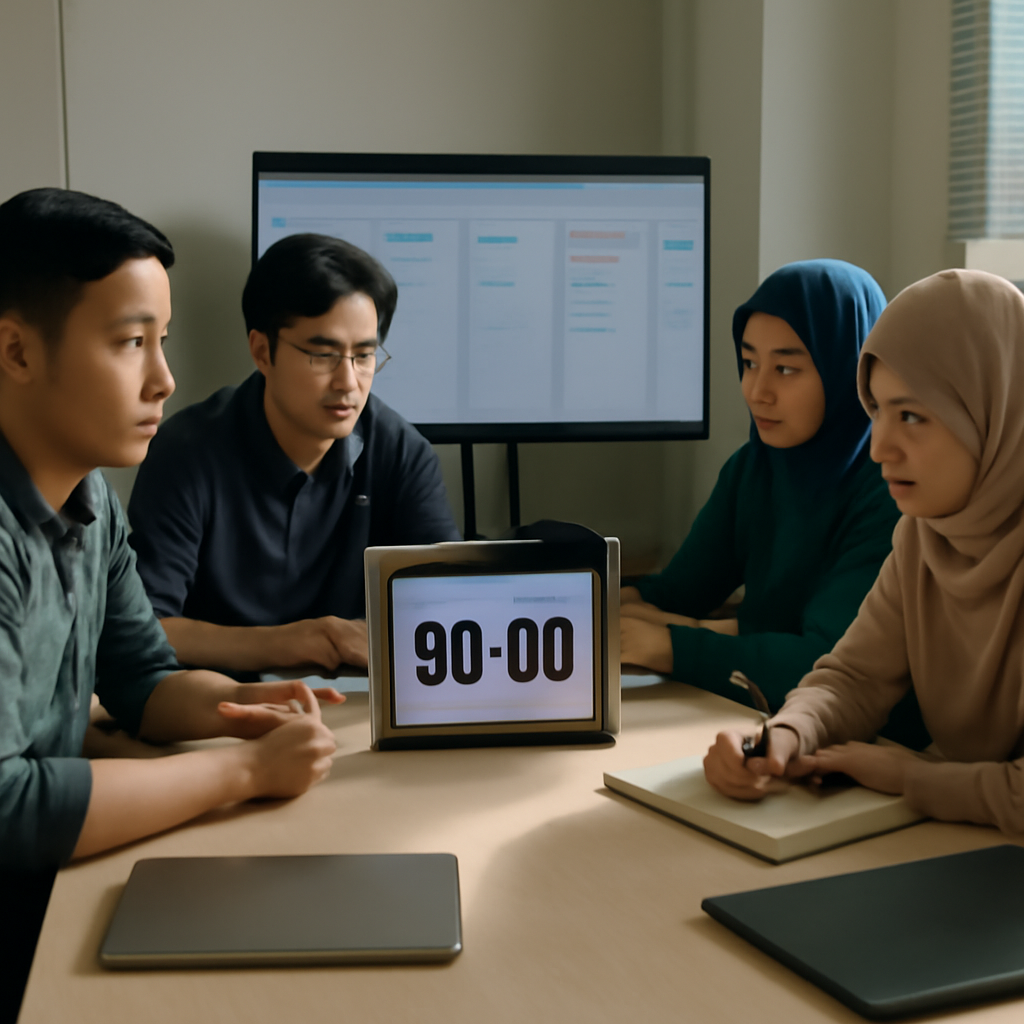
The 90-minute focus system, explained simply
Teams are not short on tools in 2026. They are short on uninterrupted execution time. Most people spend the day reacting to chats, meetings, and small tasks, then wonder why important work keeps slipping.
A practical fix is to run work in 90-minute blocks with clear intent: one focus block for deep execution, one collaboration block for alignment, and one admin block for follow-ups. AI fits into this model as a support layer, not the driver of your day.
This article gives you a usable system Malaysian teams can apply this week to reduce task overload without adding new apps.
The core problem: AI sped up inputs, not decisions
Many teams added AI assistants for summarizing meetings, drafting emails, and producing first drafts. That part works. The hidden downside is that faster output creates more items to review, approve, and route. So while raw production goes up, decision load also goes up. People feel productive, but they are cognitively saturated by noon.
You can see this pattern in three symptoms:
- Calendars are full, yet strategic work keeps slipping.
- Chat and email responses improve, but project velocity does not.
- People “finish tasks” all day but still carry unresolved priorities into evenings.
The fix is not another app. The fix is an operating rhythm that protects focus windows and constrains shallow-work sprawl.
The 90-minute focus system
This system is simple enough to deploy next Monday. It works for founders, operators, managers, and individual contributors.
Step 1: Split the day into three lanes
Use three lanes instead of one blended to-do list:
- Focus lane (90 minutes x 2 blocks): deep work only, no meetings, no chat checking.
- Collaboration lane (60–120 minutes): meetings, approvals, stakeholder sync.
- Admin lane (45–60 minutes): inbox, updates, scheduling, lightweight follow-ups.
Most teams fail because they mix these lanes every 10 minutes. Lane separation reduces switching costs immediately.
Step 2: Define one “ship item” per focus block
Before each 90-minute block, write one concrete output: a completed proposal section, a tested feature branch, a finalized client brief, or a decision memo. If the block ends without a ship item, the block was planning, not execution.
This single rule prevents fake productivity. It also gives managers clearer visibility without micromanagement.
Step 3: Use AI only at stage boundaries
AI is most useful at boundaries, not continuously. Use it to prepare before work starts (outline, assumptions, risk list) and compress after work ends (summary, next actions, open questions).
Avoid invoking AI every few minutes during deep work. Constant prompting fragments attention and turns one task into five micro-tasks.
Step 4: Put meetings on a decision diet
Every recurring meeting should answer two questions in the invite: what decision will be made here, and what document must be reviewed before joining?
If neither exists, convert the meeting into an async update. Teams often recover 3–5 hours weekly with this one change.
Step 5: Run a daily 12-minute shutdown
At day end, spend 12 minutes to close loops: capture unfinished items, assign tomorrow’s first ship item, and send any blocking handoff messages.
This reduces evening mental residue and improves next-morning startup speed.
How managers can roll this out without resistance
Do not announce a productivity transformation. Run a two-week pilot with one team.
Week 1: baseline. Measure meeting hours, reopened tasks, and end-of-day carryover.
Week 2: apply the lane model and ship-item rule. Keep tools unchanged.
At the end of week 2, compare completed outputs per person, average task age, and after-hours spillover frequency. Most teams see improvement without adding software cost. That makes adoption easier across finance-conscious organisations.
Personal operator checklist (individual contributor version)
If you are not a manager, you can still run this system personally:
- Reserve your first 90 minutes for your hardest task before opening chat.
- Batch replies three times daily instead of constant reactive messaging.
- Keep one running “decision log” so context is not lost between meetings.
- Use a single capture list for loose tasks to avoid cross-app fragmentation.
- End each day by choosing tomorrow’s first deliverable, not just first task.
The key is consistency. A simple system repeated daily beats a complex system used occasionally.
Common mistakes to avoid
- Over-scheduling focus blocks: two quality blocks beat four interrupted blocks.
- Treating AI drafts as done work: editing and decision quality still determine outcomes.
- Keeping every legacy meeting: old cadence is often the biggest drag.
- Measuring activity, not output: message count is not progress.
- Skipping shutdown routines: unfinished context compounds fatigue.
A practical weekly template
If you want a default rhythm, start here:
- Monday: planning plus one deep block and risk alignment.
- Tuesday–Thursday: two deep blocks daily plus a compact collaboration window.
- Friday: delivery closeout, retrospective, and next-week pre-load.
Protect Tuesday and Wednesday mornings as meeting-light zones. These windows usually produce the highest-value output of the week.
Bottom line
The productivity challenge in 2026 is not motivation. It is design. AI increased the volume of possible work, but teams still need a human cadence that protects attention and speeds decisions. The 90-minute focus system gives you that cadence without new budget, complex change programs, or tool migration.
If your team feels constantly busy but strategically behind, start with lane separation, ship-item discipline, and meeting decision rules. Small operational constraints can produce large productivity gains when applied consistently.
Read next
- Work & Productivity: 5 AI Shifts Saving Real Hours
- AI News Today: Faster Shipping Matters More Than Hype
- Buying a Laptop in 2026: A Practical Guide to RAM Prices and AI PC Hype
Sources
- https://trends.google.com/trending/rss?geo=MY
- https://www.reddit.com/r/Malaysia/hot/
- https://www.reddit.com/r/productivity/hot/
- https://www.reddit.com/r/remotework/hot/
- https://trends24.in/malaysia/
- https://docs.perplexity.ai/getting-started/models/models/sonar-deep-research
- https://news.microsoft.com/en-my/2025/05/08/microsofts-2025-work-trend-index-malaysian-workforce-and-leadership-align-on-intelligent-agent-integration/
- https://fortune.com/2026/02/10/ai-future-of-work-white-collar-employees-technology-productivity-burnout-research-uc-berkeley/